
Non-compliance costs – How to effectively monitor and optimize defect expenses in construction

Non-compliance costs represent a significant budget item in every construction project and can reach up to 15-20% of the total investment value. According to McKinsey research, effective defect management can reduce project costs by 8-12%. However, most construction companies still lack systematic solutions for monitoring and analyzing these expenses.

Source: Hustro
Traditional cost management vs digital solutions
Traditional defect registration methods rely on paper documentation, which hinders real-time cost monitoring. Moreover, paper catalogs don’t allow for quick trend analysis and identification of problem areas.
As a result, construction managers often learn about actual costs only during final settlements. Therefore, it’s worth considering implementing digital solutions that enable real-time monitoring.
Comparison of defect management method efficiency
| Process | Traditional method | With Hustro |
|---|---|---|
| Defect registration time | 15 min | 3 min |
| Cost report preparation time | 8 hours | 15 min |
| Monthly administration cost | €1,080 | €216 |
| Monthly savings | €864 | |
| Speed improvement | 5x faster |
Types of non-compliance costs in construction projects
Cost analysis of non-compliance requires distinguishing between two main categories: estimated and actual costs. However, it’s also worth including indirect costs, which often go unnoticed.
- Direct costs – materials, labor, equipment necessary for defect remediation
- Indirect costs – downtime, schedule delays, additional supervision
- Administrative costs – documentation, negotiations, subcontractor settlements
- Long-term costs – reputation loss, contractual penalties, warranty issues
Important: Indirect costs can account for up to 40-60% of total non-compliance costs, making their inclusion in the analysis crucial for accurate calculation of real expenses.
Practical example: non-compliance costs analysis
Let’s consider a specific case: during rooftop installation work, the air conditioning system was damaged. Consequently, repairs were necessary with the following costs:
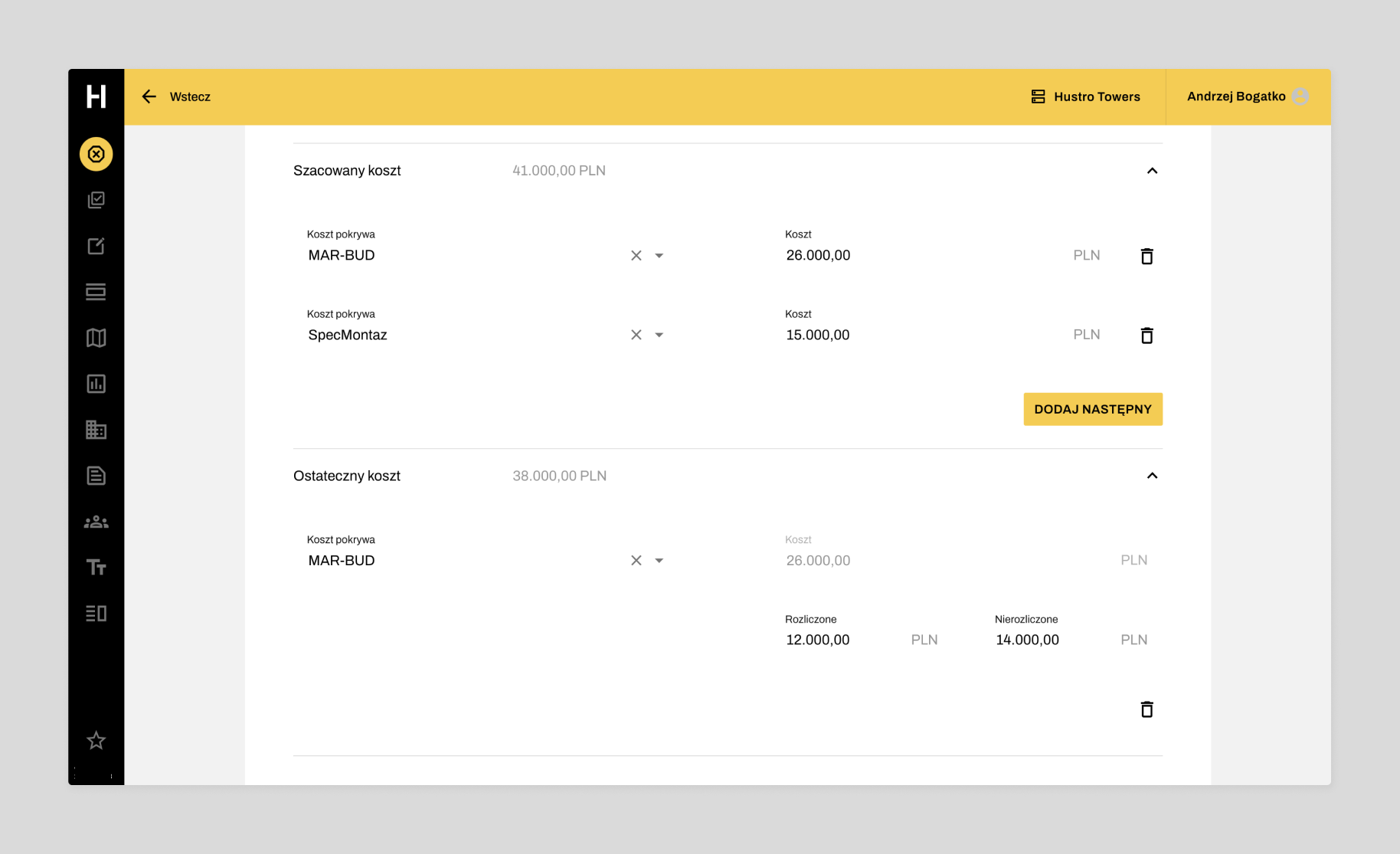
Source: Hustro – defect list with costs
Additionally, the defect caused a 3-day crew downtime, which generated additional costs of €2,430 (3 days × 6 people × €30/h × 5h). As a result, the total non-compliance cost was €20,880, while the initial estimated amount was only €18,450.
Trend analysis and problem area identification
Effective monitoring of non-compliance costs is much more than just recording individual incidents. However, the real value lies in comprehensive analysis capability and pattern identification.
Furthermore, digital tools enable quick data sorting and filtering by various criteria, such as defect type, responsible subcontractor, or occurrence period. Consequently, project managers can quickly identify problematic areas and take preventive actions.
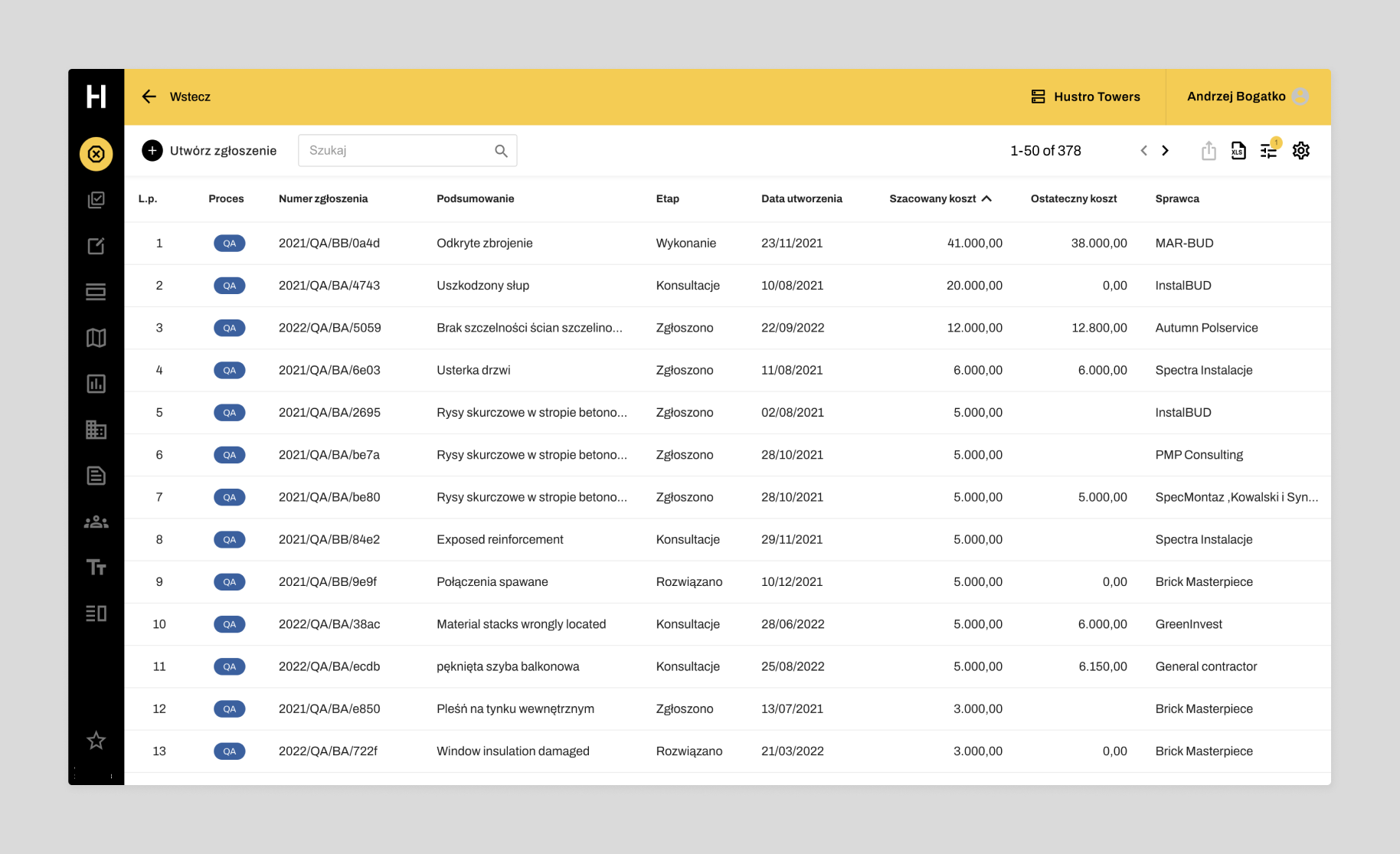
Source: Hustro – cost summary
Therefore, it’s worth investing in solutions that not only record data but also help in their interpretation. In this way, you can not only control current costs but also forecast and prevent future problems.
When to register non-compliance costs?
Not all defects require detailed cost monitoring. However, proper determination of criteria that help in selecting cases requiring thorough financial analysis is crucial.
- Defects requiring replacement work – automatic inclusion in cost monitoring
- Damage requiring element replacement – above €450 material value
- Defects causing downtime – affecting schedule for more than 1 day
- Claims reported by investor – potential contractual penalties
In contrast to the above cases, minor defects repaired within ongoing work often don’t require detailed cost registration. Moreover, their meticulous documentation may prove counterproductive due to time spent on administration.
Impact on risk management and project budget
Systematic monitoring of non-compliance costs is crucial for project financial risk management. As a result, budget overruns can be avoided and better cash flow control ensured.
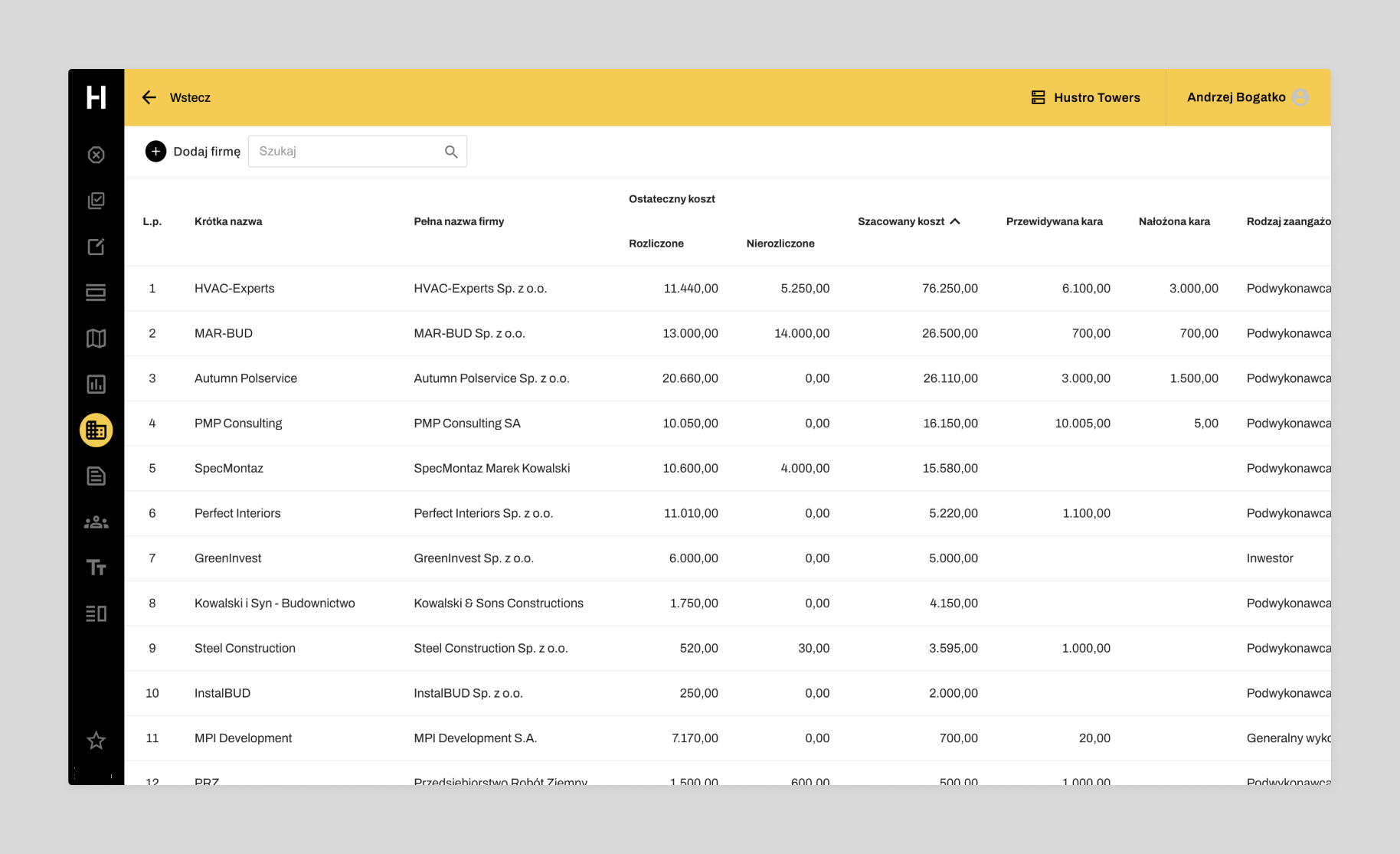
Source: Hustro – cost breakdown by subcontractors
Furthermore, detailed data on non-compliance costs provide significant support during negotiations with subcontractors and final settlements. Consequently, each company’s share in defect costs can be precisely determined and responsibility fairly settled.
Key benefits of digital non-compliance costs monitoring
Implementing a digital system for monitoring non-compliance costs brings measurable benefits to every construction project. Finally, investment in appropriate tools quickly pays off through operational savings and better cost control.
85%
Reduction in report
preparation time
€864
Monthly
savings
15%
Average reduction in
non-compliance costs
24/7
Access to
cost data
Start monitoring non-compliance costs today
Discover how Hustro can help you effectively manage non-compliance costs in your construction projects.
Explore all Hustro modules
In addition to defect management, Hustro offers a complete set of tools for construction process digitization: inspections, handovers, document management, analytics and much more.
Inspections & Handovers