
Industrial construction without compromise – an interview with Kacper Ponisz of ART Building

Industrial construction in Poland today is struggling with growing time pressure and budget constraints that have little to do with market realities. ART Building – a fast-growing general contractor in the industrial facilities segment – has developed a way of working in which team continuity, long-term thinking and the adaptation of digital tools translate into real results. Kacper Ponisz talks about where projects fall apart, why industrial halls are business tools, and how Hustro has changed the company’s approach to managing site data.
Source: Freepik
Two pressures, zero margin
Ernest Szydelski: What problems do investors planning a new industrial hall come to you with today?
Kacper Ponisz: The dominant factors shaping construction investments today are strong time pressure and budget discipline. In many cases, investors’ business assumptions do not reflect current market conditions. Over the past fifteen years or so, the minimum wage has increased several times over, and the costs of energy, materials and building components have fluctuated sharply, especially after 2020, which has significantly changed the cost structure of projects.
At the same time, the Polish market operates amid international competition – large organisations compare production and construction costs not only locally but also with alternative locations outside Europe. Lengthy administrative procedures mean that the preparatory phase takes up a large part of the schedule, while the time available for construction itself is compressed, forcing work to be done to very tight deadlines.
The same team from estimate to handover
ES: What makes clients come back to ART Building for their next investments?
KP: The key is team continuity. The people responsible for the estimate and the first conversations with the client stay involved during construction as well. They know the project from the ground up, understand the assumptions and know why specific decisions were made. In many organisations the process is split – one unit prepares the offer, another runs the construction – which increases the risk of lost information and misunderstandings during execution. That is a common cause of problems on site.
In our model, that risk does not exist. We also act as an advisory partner: we don’t just deliver the scope, we point out the consequences of individual technical, cost and schedule decisions. We can say clearly: “this solution is possible, but it will have specific operational or financial consequences”.
If at the end of the project the commitments on time, budget and quality have been kept, the client comes back for the next investment. It is a simple rule, although in the realities of the construction industry it is still not the norm.
Source: Freepik
Where projects fall apart
ES: Where do projects most often go over budget?
KP: Most often when we join a project only after the design phase is complete. In theory everything adds up, but, as usual, the devil is in the details. The adopted solutions are not optimal in technical or cost terms and it would be worth changing them. And, as we know, by then we are already working under strong time pressure.
The second scenario is when the investor has a general vision of the building’s function, but not all operational needs have been specified. During construction it turns out that additional installations, changes to the functional layout or modifications to the technical infrastructure are needed. And intervening in elements that have already been built always generates costs disproportionately high compared with the original savings.
There is, however, one more, less often discussed aspect: a lack of long-term thinking. For many construction companies, handover means the end of the project. For the investor, it is only the beginning of operation and business growth. That is why we ask questions that go beyond the current scope:
- Is an extension planned within the next few years?
- Are new production lines or a change in production profile planned?
- Do you foresee process automation?
At the stage of the first investment, it would have been enough to plan a few extra square metres and spare capacity in the power supply to avoid costs running into hundreds of thousands of złoty and intervention in an operating facility. What was missing in the whole process was one key design question: what are the possible scenarios for the plant’s development over the next 3–5 years, and has the technical infrastructure been prepared for them?
Source: Unsplash
Know-how from the site, not from a textbook
ES: You have extensive experience with automotive clients. How does that translate into subsequent projects?
KP: If we are building a facility with a profile similar to previous investments, we don’t start from scratch. We advise based on specific situations we have lived through on sites and in the later operation of buildings. This concerns very practical issues: the building structure, industrial floors, fire protection.
For example, in some production processes there is a risk of electrolyte leakage, which can degrade a standard industrial floor. Knowing this from previous projects, we immediately choose a resin system with appropriate chemical resistance.
We also have extensive experience working with foreign investors. The key is understanding how they make decisions and the challenges they face in a new country – from cultural and organisational differences to local building and administrative regulations, which can be counter-intuitive for them. Our support often begins before the design stage: we help analyse the plot, verify zoning conditions, utility availability and potential environmental constraints.
The role of a general contractor is not only to carry out construction works. Above all, it is to guide the investor through the entire investment process – from the first location decision to the safe start of operations in the new facility.
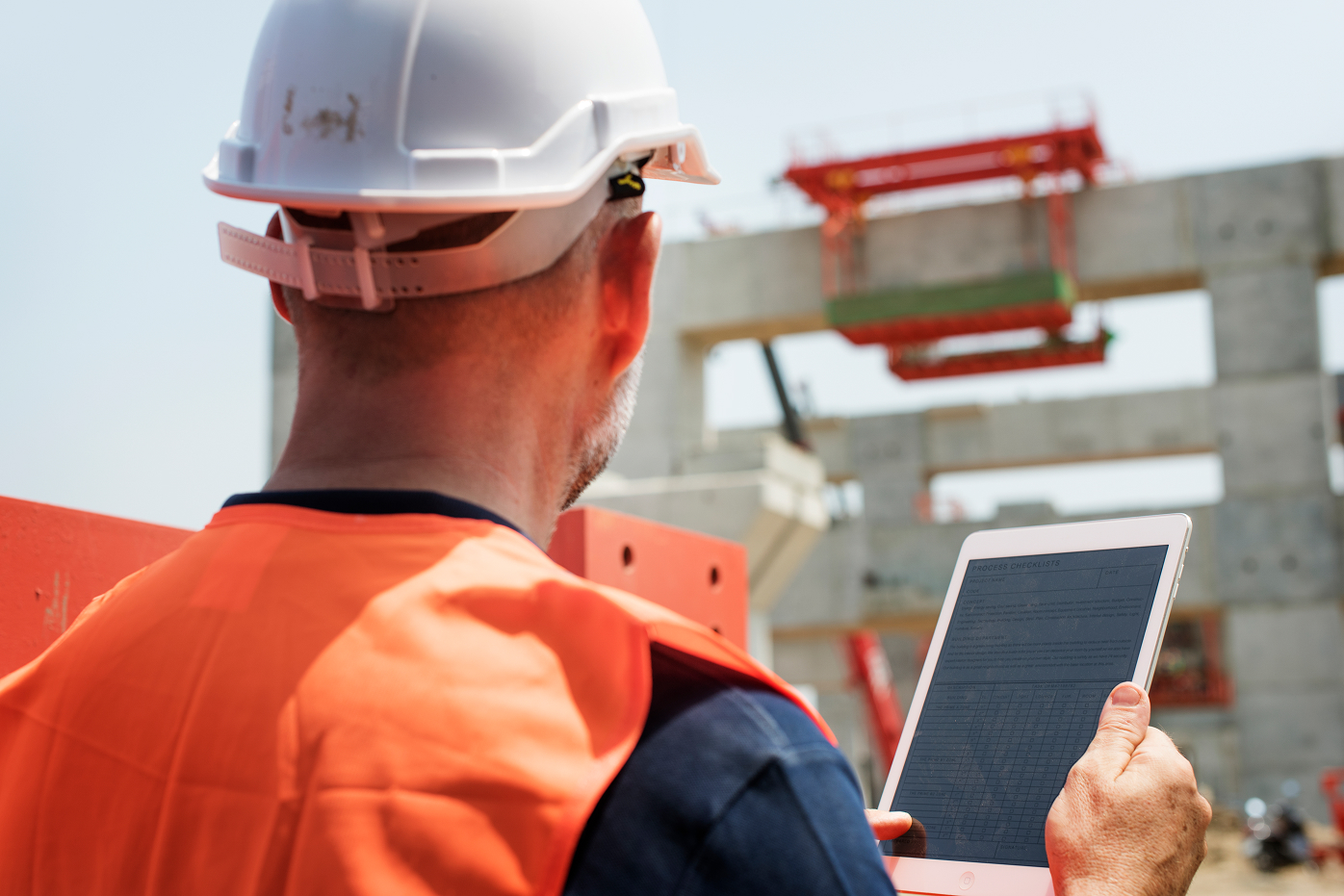
Source: Unsplash
Lessons from the first project in Hustro
ES: You started using Hustro a year ago. What has changed?
KP: At first we treated the system mainly as a tool for recording defects. We documented problems and informed the client when they had been fixed, but we did not use the full potential of the application.
Over time we realised that, quite unconsciously, we had built up a large database. A database from which you can extract data not only on defects but – after proper processing – information on the quality of subcontractors’ work or the effectiveness of the solutions adopted. And that is exactly what we are trying to do: we organise the raw data collected by Hustro using artificial intelligence and turn it into information, which, combined with our experience and analytics, becomes knowledge that helps us improve how we work.
Not adoption, but adaptation
ES: You use many digital tools. What makes the team actually use them instead of going back to WhatsApp?
KP: The key is the approach to implementation. Tools have to be adapted to the organisation, not adopted thoughtlessly in their off-the-shelf form. Standard solutions often impose rigid process frameworks that do not match the realities of a construction site. Then people treat the system as an extra burden rather than support.
Habits only change when a tool genuinely solves a problem and simplifies everyday work. If communication is faster, decisions are better documented and information is easily accessible, the team naturally starts using it.
That is what I value in working with Hustro – when we made suggestions, we could see them making it into the product. People on site notice that – that the tool is made for them, not for a presentation to the board. And then they want to use it themselves, because it simply makes their job easier.
Source: Unsplash
How to recognise a good partner in industrial construction?
ES: A plant director is looking for a general contractor for the first time. What should they pay attention to?
KP: There is no single decisive question that settles the choice. There is, however, a clear signal – how the company starts the conversation. Does it focus on presenting its own portfolio, headcount and completed projects? Or does it start by understanding my project, my business model and my operational risks?
Many companies come with a ready-made presentation about themselves. That is natural, because they want to show themselves in the best light. But that is not what investors need – they are looking for the competence to deliver a specific facility that is meant to generate revenue for many years. For a plant director, the key should be:
- Understanding of the production process – does the contractor try to understand what the company does?
- Business approach – do they understand that the building is a business tool, not an end in itself?
- Substantive preparation – do they analyse the project before the meeting?
- Risk identification – do they propose improvements instead of just confirming the scope?
If the answer to these questions is yes, it is a sign that the right people are sitting on the other side of the table.
Book a demo
Hustro is an app for general contractors. Manage defects, inspections and site documentation – all in one place.