
Psychological and cultural barriers to the digitalisation of construction


Management often points to psychological and cultural barriers as the main obstacles to digitalisation on construction sites. Resistance from experienced workers and an opaque communication culture are frequently cited as the main causes. However, my own experience and scientific research shed new light on this issue.
Real experience vs. stereotypes
I have not noticed any link between the age of the app’s (Hustro’s) users and their activity or decision-making. Very often, people with many years of experience are the most active users. I also see signs of an opaque working culture only occasionally, and they are usually linked to members of management who impose their own way of working on the site, justifying it by greater efficiency.
I believe that psychological and cultural barriers are linked not to our industry but to well-researched human behaviours: attachment to the status quo, fear of change and apprehension about making decisions. What do these behaviours involve?
Research by Daniel Kahneman and Amos Tversky, published in The psychology of preferences. Scientific American in 1982, points to the existence of the “omission bias” – a cognitive bias that makes us perceive the consequences of an error resulting from action differently from those of an error resulting from inaction. An example is the decision to buy new software for a project team.
New software could increase the team’s productivity and deliver savings of PLN 100,000. Not deciding to buy the software will therefore cost PLN 100,000. But what if you decide to buy the software and the implementation turns out to be a flop, leading to a loss of PLN 100,000? Most people would choose the first option without hesitation, even though the effect is the same. We feel it is better for a loss to be caused by inaction than by our own action.
Not deciding to buy the software will therefore cost PLN 100,000. But what if you decide to buy the software and the implementation turns out to be a flop, leading to a loss of PLN 100,000?
The real causes of resistance
Attachment to the status quo was brilliantly illustrated in research by S. Eidelman, J. Pattershall and C. S. Crandall in the research project Longer is Better, whose results were published in the Journal of Experimental Social Psychology, Volume 46in 2010. In the experiment, one group of participants was asked to rate a painting dated 1905. Another group rated the same painting, this time presented as having been created in 2005. The painting dated 1905 was rated as more aesthetically pleasing than the same painting dated 2005. The study was carried out in many different variants, but all gave the same result – the “older” paintings always turned out to be better. As humans, we naturally assume that older ways of doing things are better.
According to these researchers, fear of change stems directly from the way our brain works. Research shows that new activities create a greater load than those we are used to, and even when we decide to change how we act, the brain tries to use patterns familiar from our habits. Our natural goal is to minimise effort, which means that every attempt at change meets with resistance from the body.
Countering resistance
Once we understand the reasons behind indecision and fear of change, we can more easily spot them in our team’s behaviour and counter them effectively. The most effective actions explain and reduce natural objections by lowering the risk of the decision taken.
The most effective actions on the part of those introducing new solutions include: clearly presenting the problem we want to solve, eliminating the old ways of working (so that there is no alternative), promoting the benefits of the new solution with the specific person’s gains in mind, not just the organisation’s, and creating a coherent strategy for solving problems with technology.
When selecting solutions, it is worth paying attention to:
- vendors’ help with implementation and staff training,
- the level and availability of vendors’ technical and subject-matter support,
- the complexity of the proposed implementations.
A lack of support often makes it difficult to understand the sources of the problems we want to solve and prolongs implementation. Working with a competent vendor helps reduce psychological and cultural barriers by drawing on an expert’s experience.
For those who are interested, there is also the option of campaigning for changes in the law. Through industry organisations such as SIDiR, Contech Poland or PZPB, you can present your proposals to legislators more effectively than acting alone.
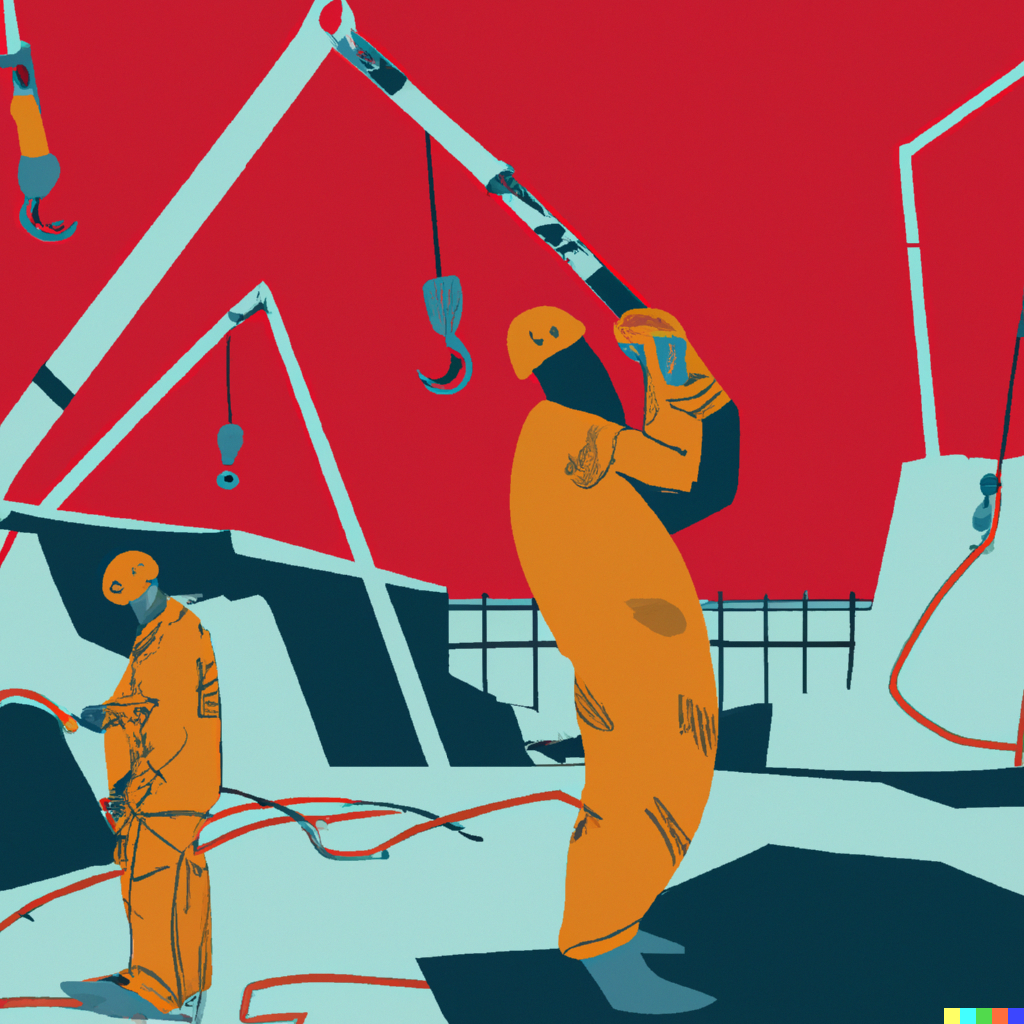
A lack of support often makes it difficult to understand the sources of the problems we want to solve and prolongs implementation.
Key takeaways
Research and practitioners’ experience show that there is no significant link between workers’ age or experience and their readiness to adopt new technologies. What matters are human behaviours such as attachment to the status quo and fear of change, which can be neutralised through deliberate action.
Finally, effective action to introduce new solutions should include clearly presenting the problem, eliminating old ways of working and providing technical and subject-matter support. Working with experienced vendors can help overcome psychological and cultural barriers by drawing on their expertise.
Frequently asked questions
Does workers’ age hold back the digitalisation of construction?
No. Implementation experience shows that age and seniority do not translate into resistance to technology – experienced people are often the most active users of systems.
What is the omission bias?
A phenomenon described by Kahneman and Tversky (1982): we perceive errors resulting from inaction as less severe than errors resulting from action, which is why decision-makers are more inclined to stick with old solutions.
Why do people cling to the status quo?
Research by Eidelman, Pattershall and Crandall (2010) shows that we perceive older methods as better, and that new activities place a greater load on the brain than habits, which creates natural resistance.
How can you reduce resistance to digitalisation in a company?
Clearly name the problem the tool is meant to solve, retire old procedures, show employees concrete benefits, use the vendor’s support for training, and get involved in industry organisations such as SIDiR or Contech Poland.
Ready for digital transformation in your company?
Start your journey towards effective quality management today. Automating quality control processes during construction means greater accuracy, lower costs and more satisfied clients.
Related articles
-

CDE platform for residential developers – from zoning approval to post-handover defects
-

CDE platform adoption – why teams go back to email despite a deployed system
-

How to write CDE platform requirements that work – not just on paper
-
Industrial construction without compromise – an interview with Kacper Ponisz
-

How to build positive safety culture in construction companies?
-

Non-compliance costs – How to monitor defect expenses